
An Install Is More Than Putting Rubber on a Rim
Tire change and installation in Glasgow, KY — when you buy tires here, the install is part of doing the job right, not an afterthought. A proper install is a sequence: the old tire comes off, the rim gets inspected for damage and corrosion, a fresh valve stem or TPMS service kit goes on, the new tire is mounted without chewing up the bead, and the wheel is balanced before it ever goes back on the vehicle.
Then the wheel goes on the hub clean, the lug nuts are torqued to the manufacturer's specification — not just run down with an impact gun and forgotten — and the pressures are set to the placard on your door jamb, not a guess. The TPMS sensors are relearned or reset so the light on the dash means something again.
That sequence is why an install here takes a bay, a trained tech, and the right machines instead of a jack in a parking lot. It is also why lug torque should be re-checked shortly after any wheel has been off — stop back in after the first miles and we will re-check it.
Buying for a truck that works? The same care applies to light-truck and load-rated tires, and if the old set still has life in it we will say so instead of selling you out of it. More brands than we can list, installed by the people who will see the vehicle again at rotation time.
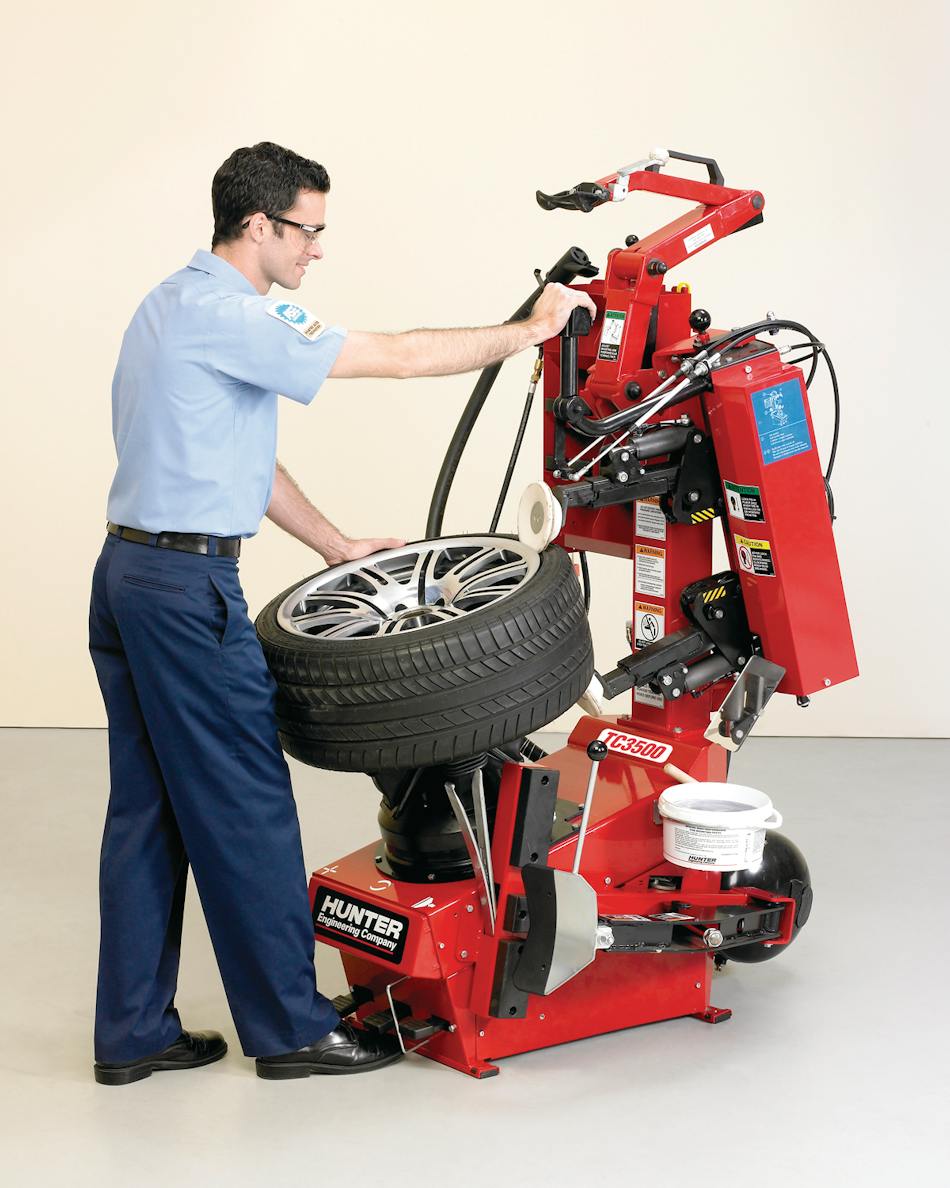
The Hunter TC3500: Built to Protect Your Wheels
Most wheel damage happens on the tire changer, not on the road. Our Hunter TC3500 is a reverse-mount tire changer: wheels built with a reverse drop center are clamped and mounted upside down, the way they were designed to come apart — so nothing pries against the face of your wheel.
That matters if you have money in your wheels: custom and aftermarket wheels, polished, chrome, and painted finishes. A basic changer and a careless lever will gouge a rim lip, chip a finish, or tear a bead that leaks later. The TC3500 was built for exactly the wheels a basic changer ruins, and it handles stiff low-profile and run-flat tires without muscling them onto the rim. It mounts wheels up to 26 inches.
It is also why the lifted trucks and custom wheel setups on our lifts get their tires changed here: the machine protects the wheel, and the tech running it knows what a replacement wheel costs.
Signs the Old Set Is Done
Tread worn to the wear bars, cracking in the sidewalls, a bulge or blister, or a puncture in the sidewall or shoulder — those are replace signals, not repair signals. A set that has gone loud, harsh, or nervous in the rain is telling you the same thing more quietly.
Not sure whether you need tires or just work? Bring it by — the wear pattern on the old set gets read before anything is quoted, and if a front-end problem is what ate the tires, that gets named first so the new set does not die the same death.
the tire has given its miles — replacement, not rotation
structural damage — that tire is done, full stop
mounting or balance done in a hurry — worth a second look
Ready for a set, installed right? Book an install → or call (270) 861-2003.
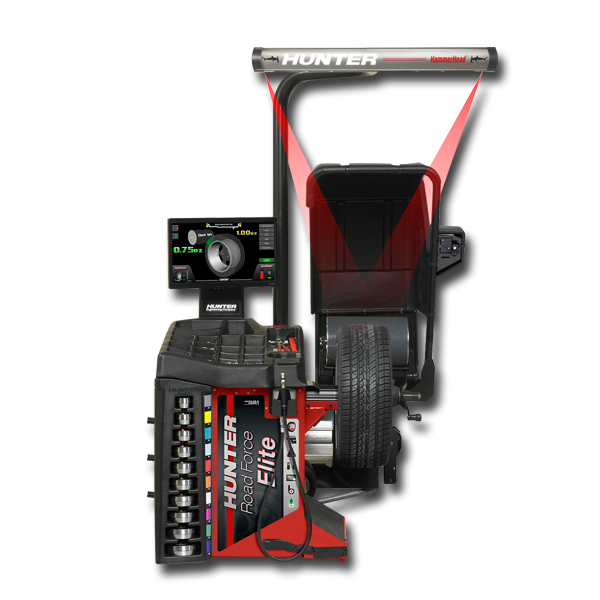
Balanced on the Road Force Elite Before It Ever Rolls
Every install here ends on the balancer, and ours is not a basic spin balancer. The Hunter Road Force Elite presses a loaded roller against the tire as it turns, measuring how the assembly actually behaves under the weight of the vehicle — which is how it catches things a spin balance waves through: a tire whose stiff spot meets a wheel's low spot, a rim with a slight bend, a tire that is round in the rack and not quite round on the road. When the numbers say the pair can ride better, match mounting rotates the tire on the rim so the two cancel instead of adding up.
That last step is the difference between a set that feels finished and one that hums at 65 on the way to Bowling Green and comes back a week later as a vibration complaint. Customers ask for this machine by name because the ride home tells on a shortcut balance immediately. An install that skips the loaded check can be balanced on paper and wrong on pavement; ours get proven under load before the lug nuts are torqued and the vehicle leaves. More on how it works is on our Road Force balancing page.
Size and Load Rating Get Confirmed Before Anything Is Mounted
Before a tire is mounted, its spec gets checked against the vehicle — the size on the door-jamb placard, and for trucks, the load rating the work demands. A pickup that tows or hauls around Barren County needs a tire built and rated for that weight; a passenger-rated tire in the same size can exist on the shelf and still be the wrong tire for the truck, squirming under load and wearing fast for reasons that look like bad luck. Load range is not an upsell detail. It is the difference between a set that works as long as it lasts and one that never feels right.
The same check catches the changes owners actually ask about. Going up a wheel size alters sidewall height, ride, and how the speedometer reads, and none of that should be discovered after the set is on the ground. Tell us what you are thinking — a bigger wheel, a taller tire, a heavier rating for the trailer — and the fitment gets worked out first, against the truck, the clearance, and the job it does. Then the mounting starts, on the TC3500, with the spec already settled.
Ready to Roll? Let’s Get You on the Schedule.
Call the shop at (270) 861-2003 and we’ll line it up — or book online and we’ll confirm your time. Walk-ins are welcome Monday–Friday, 8:00 AM–5:00 PM.
Should the alignment be checked when a new set goes on?
It is worth verifying, yes. Worn angles are what ate the old set's edges, and they will start on the new set the day it rolls out. Alignments start at $89.99 on most vehicles here, and checking the angles while the new tires are fresh protects the money you just spent.
My wheels are bigger than 26 inches. Can you still mount tires on them?
Our Hunter TC3500 handles wheels up to 26 inches, which covers the large majority of custom and truck setups. Beyond that size, call (270) 861-2003 and we will tell you straight what we can do rather than guess at your wheels.
Why do the valve stem parts get replaced at install time?
Because stems and sensor seals age in the same heat and weather the tire does, and a cracked stem is a slow leak waiting for its moment. Fresh stem hardware while the tire is already off costs little; the same leak chased a month later costs a second visit.
What does a tire installation include here?
Dismount and rim inspection, a new valve stem or TPMS service kit, mounting, balancing, torque to the manufacturer's spec, pressures set to the door placard, and a TPMS reset or relearn where the vehicle needs one.
Should lug nuts be re-checked after an install?
Yes — lug torque should be re-checked shortly after any wheel has been reinstalled. Stop back in after the first miles and we will re-check it.
Do you install tires for trucks?
Yes — passenger and light-truck tires are the shop's core work, including load-rated sets for trucks that tow and haul.
Can you change tires on custom wheels without scratching them?
Yes — that is what our Hunter TC3500 reverse-mount changer is for. Reverse-mount and custom wheels are clamped and worked from the back side, so the face and finish of the wheel are protected while the tire goes on and off. It mounts wheels up to 26 inches.
Where are you located?
1004 Happy Valley Rd, Glasgow, KY 42141 — about 15 minutes from I-65 Exit 53 in Cave City.