
That Tire-Pressure Light Is Telling You Something
TPMS service in Glasgow, KY — the tire pressure monitoring system is the dashboard light shaped like a tire cross-section, and it is doing one of two jobs: warning you a tire is low, or telling you the system itself has a fault. We sort out which one it is.
A light that comes on and stays on usually means one or more tires are under-inflated. A light that flashes when you start the vehicle and then stays on usually means a system fault — most often a sensor whose battery has worn out. The sensors live inside the wheels, and their batteries do not last forever, so a sensor can die while the tires themselves are fine.
Adding air to a light that keeps coming back is a short-term answer. If the light returns, there is a reason — a slow leak, a valve problem, or a dead sensor — and finding it is a diagnosis, not a top-off. Kentucky cold mornings make borderline tires dip under the threshold, which is why the light often shows up on the first cold snap of the season and then will not stay off.
Because the sensors come out with the tires, TPMS is handled in the same visit as your tire work here — mounting, rotation, and repairs all include a careful eye on the sensors, and a sensor that needs replacing goes in while the tire is already off the rim.
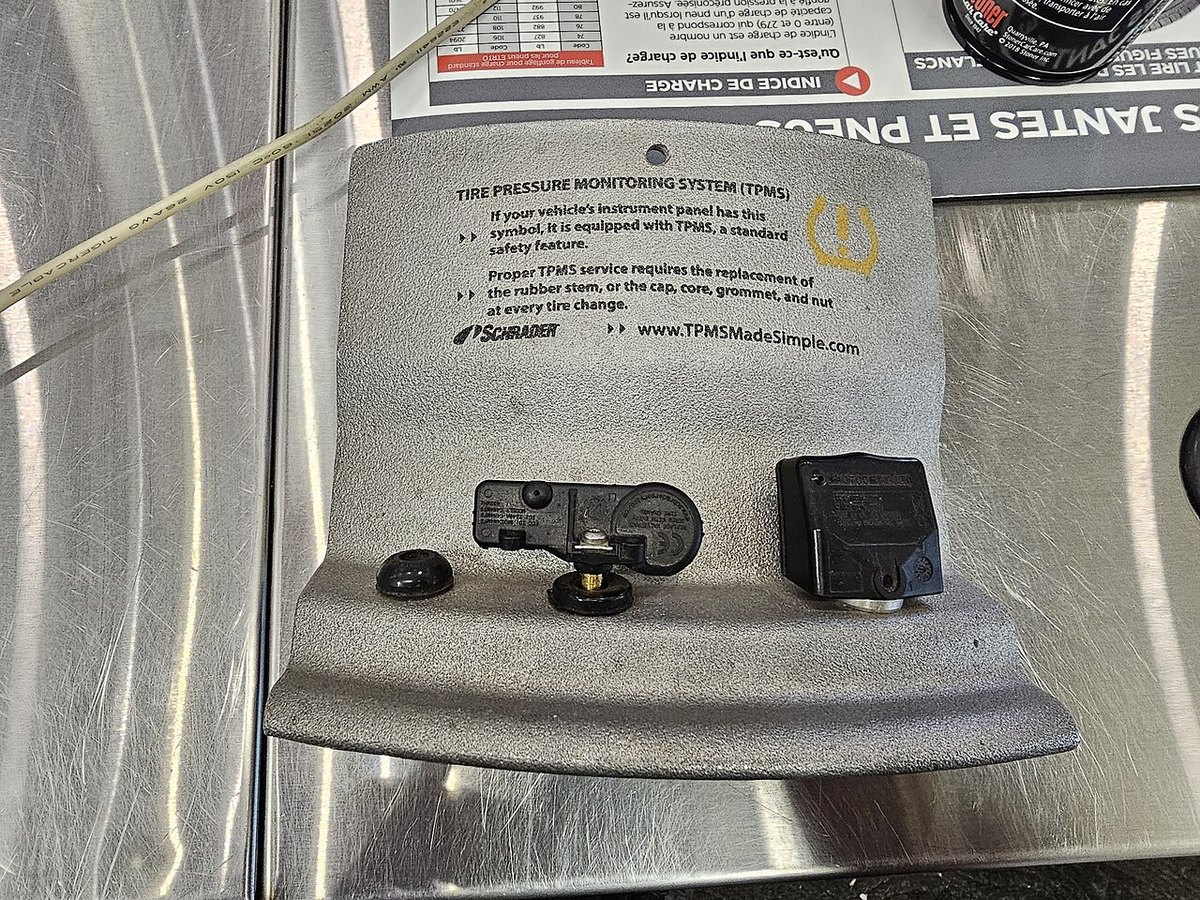
Three Ways the Light Shows Up
A steady light after a cold night often means the pressure simply dipped — worth checking the pressures before anything else. A light that comes back within days of adding air means air is going somewhere, or a sensor is reading wrong. Either way, guessing gets expensive: a tire run low wears fast and runs hot.
If the light flashes at startup, do not just top the tires off and wait — the system is reporting a fault in itself, and only a sensor check settles it. Bring it in and we will tell you straight which problem you have.
usually low pressure in one or more tires — check pressures first
usually a system fault — most often a sensor battery at the end of its life
a slow leak or a failing sensor — topping off will not settle it
Light on and not sure which kind? Book a TPMS check → or call (270) 861-2003.
How a Sensor Gets Replaced and Relearned Here
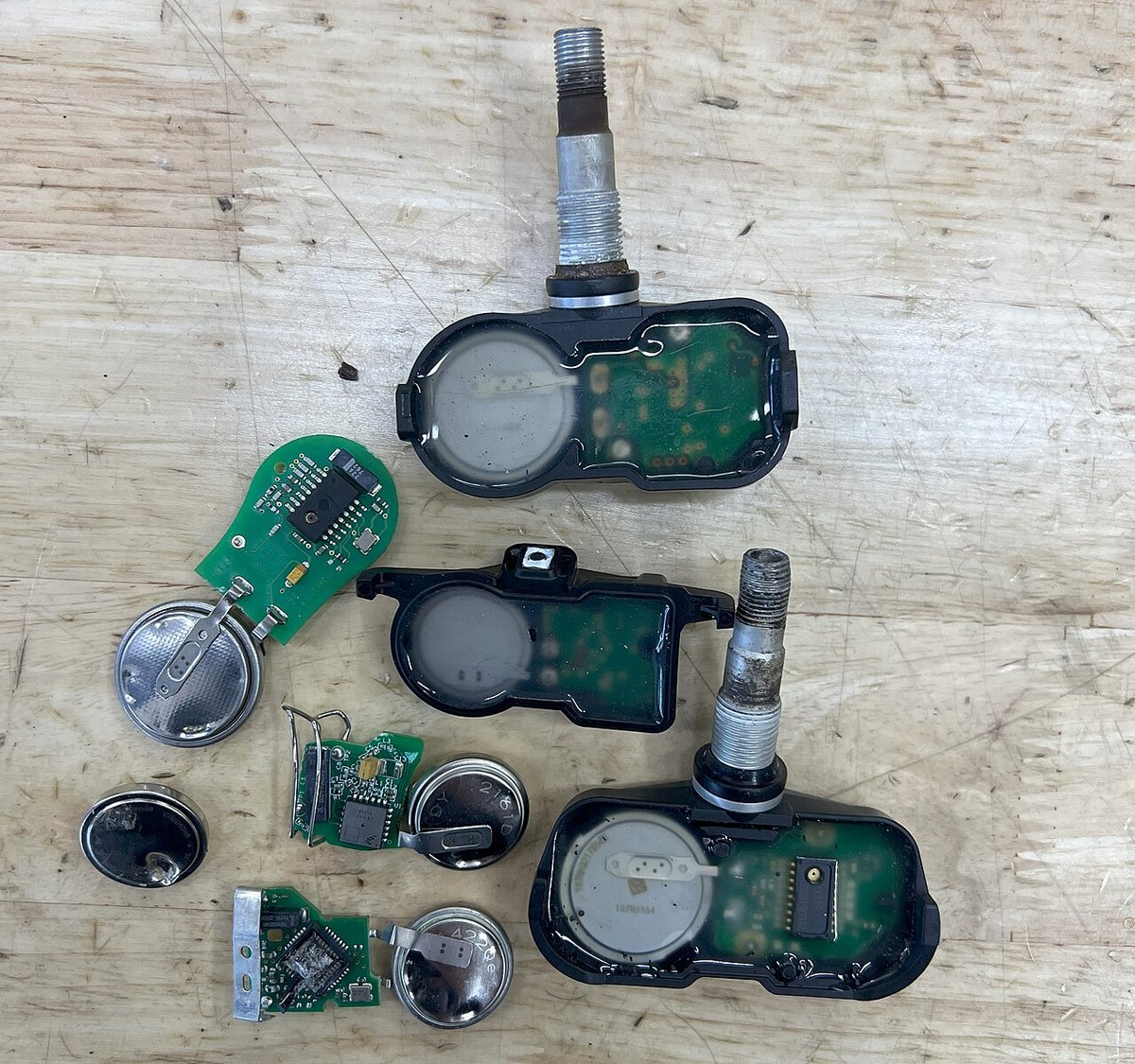
A sensor job starts with identifying the guilty corner, not assuming it. A scan tool talks to each wheel in turn, and the sensor that has stopped reporting — or reports a pressure nobody can match with a gauge — names itself. Because the battery inside a sensor is sealed into the housing, a tired sensor is replaced as a unit; most last roughly five to ten years, or around 100,000 miles, before that battery gives out. The tire comes off on the Hunter TC3500 changer, which is built to protect the wheel's finish while the work happens around it.
Fitting the new sensor is only half the job. The vehicle then has to learn it — some models relearn stationary with a tool at each corner, others need a short drive cycle before the system accepts the new voice — and the relearn is not done until every position is reporting and the light behaves the way the book says it should. Skipping that step is how a vehicle leaves one shop with a new sensor and the light still on. Ours get verified before they roll out.
Why the Light Is the Last to Know
Here is the number that changes how most drivers treat that light: by federal standard, it does not have to come on until a tire is about 25 percent below the pressure on the door-jamb placard. On a vehicle that calls for 35 psi, a tire can sit near 26 psi — flexing more, running hotter, wearing its shoulders — for weeks before the dash says a word. The reverse is just as true: a tire 15 percent low costs fuel and tread with the light still dark. The light is a late warning, not a measurement.
That is why a real gauge check still matters, done monthly and done right: pressures checked cold, before the vehicle has been driven, and set to the placard number on the door jamb — not the maximum molded into the tire's sidewall, which is a ceiling, not a target. Check the spare while you are at it; a full-size spare on many vehicles carries a sensor of its own, and a forgotten spare going soft can be the whole reason the light came on. If your gauge and the light disagree, bring both to us at 1004 Happy Valley Rd and we will settle which one is telling the truth.
Ready to Roll? Let’s Get You on the Schedule.
Call the shop at (270) 861-2003 and we’ll line it up — or book online and we’ll confirm your time. Walk-ins are welcome Monday–Friday, 8:00 AM–5:00 PM.
All four tires look fine. Can the light just be wrong?
It can be fooled, but looks deceive first: a tire can be a quarter low on air and not look flat from the curb, especially a stiff-sidewall truck tire. A gauge on all four corners settles it — and if the pressures are right, the system itself gets checked for a failing sensor.
Could my spare tire be setting the light off?
On many vehicles, yes. A full-size spare often carries its own sensor, and a spare that has slowly gone soft in the well can trip the warning while all four road tires are correct. It gets checked along with the rest.
The light came on right after tires were mounted somewhere else. What happened?
Two common causes: a sensor damaged during mounting, or a relearn step that never got done, so the vehicle is still listening for a sensor arrangement that changed. Either way, a sensor check tells us which corners are reporting and which are not.
What does it mean when the TPMS light flashes before it stays on?
That pattern usually means the system has found a fault in itself — most often a wheel sensor whose battery has worn out. The tire pressures may be fine; the sensor needs checking.
Can you replace a TPMS sensor?
Yes — sensors are replaced here, and the natural time to do it is while the tire is off the rim for mounting, rotation, or repair. We will tell you which sensor has failed before any work starts.
The light came on after a cold night. Is that normal?
It is common — cold air lowers tire pressure, and a tire that was borderline dips under the warning threshold. Check the pressures; if the light keeps returning, have it looked at.
Where are you located?
1004 Happy Valley Rd, Glasgow, KY 42141 — about 15 minutes from I-65 Exit 53 in Cave City.