
The Battery Gets Blamed for the Alternator's Work
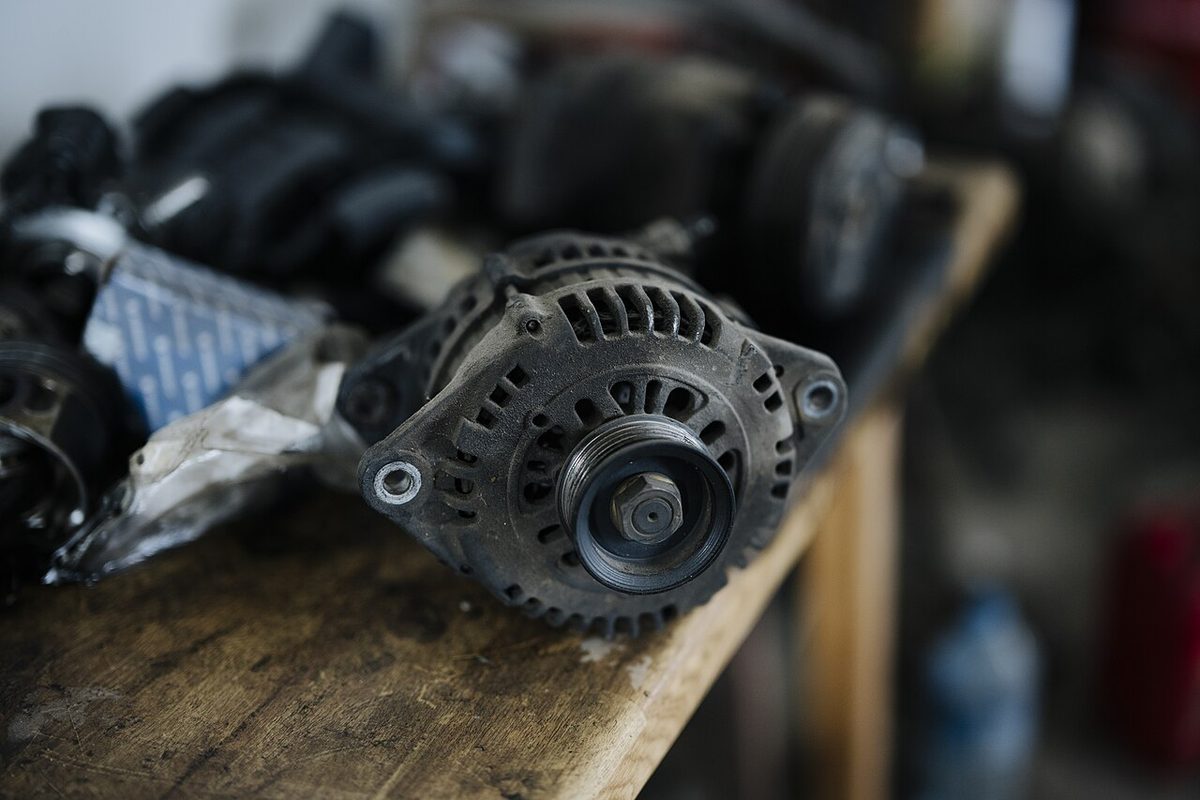
Alternator repair in Glasgow, KY — the alternator is the part that actually powers the vehicle once the engine is running, and recharges the battery for the next start. When it starts to fail, the symptoms look electrical and confusing: a battery light on the dash, lights that dim at idle and brighten with rpm, or a battery that keeps going dead even though it is not that old.
The trap is replacing batteries. A weak alternator undercharges the battery, the battery dies, a new battery goes in — and dies the same way, because the part that was failing never got touched. That is why the charging system gets tested as a system here: battery, alternator output, starter draw, and the cables between them, so the part that is actually bad is the part that gets replaced. The wider electrical picture lives on our Battery & Electrical page; this page is the alternator's own.
The alternator is driven by the serpentine belt, so belt condition is part of the same check — a glazed or cracked belt can slip under load and imitate an alternator fault, and a failing alternator bearing can sing through the belt path. Belts and charging get read together, not in separate guesses.
Signs usually give warning before they give a no-start: a battery light flickering over bumps, headlights that pulse, a whine that follows engine speed, or a vehicle that needs jumps more and more often. Caught at the warning stage, it is an alternator. Caught at the roadside stage, it is an alternator plus a tow.

Signs the Alternator Is Fading
The battery warning light is the direct one — it monitors the charging system, not just the battery, despite its shape. Dim or flickering lights, power windows gone slow, and gauges that act strange are the alternator failing to keep up with the vehicle's electrical load.
A jump start that gets you here is useful information, not a repair: if the vehicle dies again shortly after, the alternator is not refilling what the starter spent. Bring it in while it still starts — testing takes minutes and settles the battery-versus-alternator question for good.
the charging system is reporting — most often the alternator itself
the alternator is not recharging what the starter spends
alternator output is sagging exactly when demand is low-speed
Battery light or repeat dead batteries? Book a charging check → or call (270) 861-2003.
Kentucky Summer Heat Is Hard on Alternators Too
An alternator's hardest shift comes on a July afternoon in Glasgow. Underhood temperatures peak, the air-conditioning blower and electric cooling fans run at full draw for hours, and headlights, a trailer's lights, and every accessory pull on the same unit — maximum electrical load at maximum heat, mile after mile. Heat is what ages the alternator's bearings and internal electronics, so a unit that charged politely all spring can start sagging on the first long, hot drive of summer, often far from home.
Winter runs the opposite ambush. A cold snap thickens engine oil, the starter pulls harder and longer to turn the engine over, and the alternator has to replace that bigger withdrawal from a battery that cold has already weakened. That is also why a battery replaced in the fall without a charging test can be back on a jumper pack by Christmas. An alternator and battery that are each merely tired can cover for each other in October and strand you together in January — which is why a charging complaint in any season gets the battery and electrical system tested as one unit.
Battery First, Output Second, Cables Third — in That Order
The test sequence matters because each part can incriminate the wrong one. The battery is checked first: a shorted or sulfated battery can drag charging voltage down and make a healthy alternator look guilty — and keep killing replacements. Then the alternator's output is measured at idle and under real load, with lights, blower, and defroster switched on, because an alternator that passes unloaded and fails loaded is still a failed alternator. Output that fades as the unit warms up gets noted too; heat-sensitive failure is a pattern, not a mystery.
Last come the cables and grounds, the most overlooked culprits in the system. Corrosion at a terminal or a ground strap — helped along by winter road treatment on Kentucky highways — creates resistance that starves the starter and fools the charging system, imitating both a bad battery and a bad alternator in the same vehicle. Voltage-drop testing finds it in minutes. Let any of this ride and the outcomes worsen quietly: chronic undercharging deepens until a no-start arrives unannounced, and an alternator whose regulator fails the other way can overcharge, cooking the battery and stressing every electronic module on the vehicle.
Ready to Roll? Let’s Get You on the Schedule.
Call the shop at (270) 861-2003 and we’ll line it up — or book online and we’ll confirm your time. Walk-ins are welcome Monday–Friday, 8:00 AM–5:00 PM.
Can a corroded cable really make it look like the alternator failed?
Yes. Resistance in a cable or ground drops voltage everywhere downstream, so the battery charges poorly and the starter cranks weakly — the two classic alternator symptoms — with a perfectly good alternator installed. That is why voltage-drop testing the cables is a standard step here, not a last resort.
My lights only dim at stoplights in summer. Is that worth checking?
It is. At idle the alternator turns slowest while summer loads — cooling fans and the air-conditioning blower — run hardest, so a fading unit shows its weakness there first. It is a warning given at low stakes; the same failure at highway speed at night is a different story.
If my vehicle dies on the road near Glasgow, can you tow it in?
Existing customers get free towing within 15 miles — see our towing page. If you are not yet a customer, call us at (270) 861-2003 and we will help you sort out getting the vehicle here.
How do you know it is the alternator and not the battery?
By testing the system as a system — battery condition, alternator output under load, starter draw, and cable condition. The test names the failing part before any part is sold.
Can a bad alternator kill a new battery?
Yes — a battery that is chronically undercharged by a weak alternator sulfates and dies young. That is why a repeat dead battery gets a charging-system test, not just another battery.
What are the early warnings?
A battery light, dim or flickering lights, slow power windows, a whine that follows engine speed, and needing jumps more often. Any of them is a cheap time to find out.
Where are you located?
1004 Happy Valley Rd, Glasgow, KY 42141 — about 15 minutes from I-65 Exit 53 in Cave City.