
Cheap Parts. Expensive Failures.
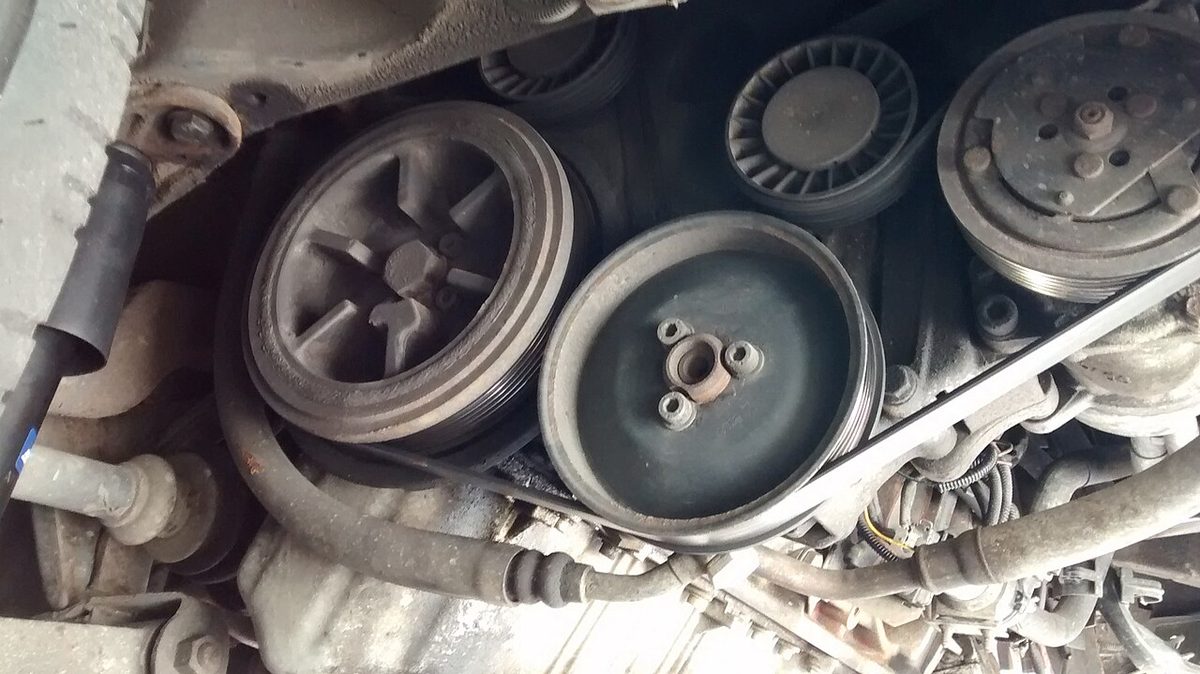
Belts and hoses in Glasgow, KY — the serpentine belt drives the alternator, the water pump, the power steering, and the A/C compressor off one loop of rubber. When it goes, all of them stop at once, and the vehicle is done driving within minutes — the battery light, stiff steering, and a climbing temperature gauge arrive together. It is one of the most preventable strandings there is.
Hoses age from the inside out. A coolant hose can look fine on the surface and be soft, swollen, or cracking where it meets the fitting. Squeezing and inspecting them is part of a careful look under the hood — and a hose that lets go dumps the coolant the engine needs, which turns a hose bill into an overheating problem if the vehicle keeps moving.
The timing belt is the serious one. On engines that have one, it keeps the valves and pistons in step; it has a replacement interval in the owner's manual, and on many engines a snapped belt bends valves — a maintenance item that becomes an engine repair when it is ignored past its interval. If you do not know whether yours has been done, that is worth finding out before the interval finds you.
None of this is guesswork to sell parts. Belts and hoses get inspected and shown — cracks, glazing, softness, and leaks are things you can see with your own eyes when they are pointed out.

Squeals, Cracks, and Soft Spots
A belt that squeals on startup or when the A/C kicks on is slipping or glazed. A hose that feels mushy, bulges near a clamp, or leaves crusty residue at a fitting is living on borrowed time. Both are talking before they fail — the skill is listening during a routine visit instead of on the roadside.
If your vehicle is past its timing-belt interval and there is no record of the job, treat that as your sign. It does not give others.
slipping, glazed, or a pulley asking for help — before it becomes silence and a tow
coolant hoses fail from the inside; the squeeze test tells the truth
no warning signs at all — the manual's mileage is the warning
Hear a squeal? Book a belt check → or call (270) 861-2003.
Tensioners and Idlers: The Pulleys That Decide a Belt's Fate
A serpentine belt rarely fails by itself. It runs under tension from a spring-loaded tensioner and around idler pulleys, and those parts age on the same schedule the belt does. A tensioner whose spring has weakened lets the belt slip and glaze; an idler bearing going dry squeals, wobbles, and can seize outright — and a seized pulley shreds a healthy belt in miles. That is why a belt squeal here gets traced to its source before a belt is sold: the belt, the tensioner, and every pulley it wraps get spun, listened to, and checked for play and wobble.
The same logic applies when a belt is replaced for age. Putting a new belt over a tired tensioner is half a repair, and the honest quote says so up front. What you get instead is a verdict per part — belt condition, tensioner strength, pulley bearings — so the replacement that goes on is the one that stays on. On the winding roads between Glasgow and Scottsville, power steering and charging depend on that loop every mile; a pulley caught at a routine visit is a small part, and the same pulley ignored is the roadside version of the story, with existing customers covered by free towing within 15 miles if it ever comes to that.
The Squeeze Test, the Clamps, and Cooling's Weakest Links
Coolant hoses deteriorate from the inside out, attacked by heat and by the coolant itself as its protective additives deplete — a process that softens the hose from the inner wall outward, worst near the fittings where the hose meets hot metal. That is why the inspection here is done by hand as much as by eye: a sound hose feels firm and springy along its whole length, while a failing one feels mushy, crunchy, or noticeably softer near the clamp than in the middle. Bulging at a fitting and white or rusty crust tracing a seep are the visible half of the same story.
Clamps get their share of the blame honestly assigned. A clamp that has lost its bite lets a sound hose weep only under pressure and heat — the leak that tops off the reservoir every month and never leaves a puddle in the driveway. Hose and clamp findings get reported together, because replacing one while ignoring the other buys the same visit twice. Left to finish failing, a hose lets go all at once under load, dumps the engine's coolant in seconds, and hands you the overheating emergency this page exists to prevent — which is why these parts are checked at every maintenance visit, not when they ask.
Ready to Roll? Let’s Get You on the Schedule.
Call the shop at (270) 861-2003 and we’ll line it up — or book online and we’ll confirm your time. Walk-ins are welcome Monday–Friday, 8:00 AM–5:00 PM.
My belt only squeals for a few seconds on cold mornings. Is that serious?
It is information. A brief cold squeal usually means the belt is slipping until it warms and grips — from glazing, a weakening tensioner, or a pulley starting to drag. It nearly always gets longer and louder with time, and tracing it now is cheaper than the morning it does not stop squealing.
Should the tensioner be replaced with the belt?
Often, yes — the tensioner and idler pulleys age alongside the belt, and a weak tensioner will slip and glaze a brand-new belt. Each part gets checked and reported on its own condition, so you see the verdict for the pulley hardware before anything is replaced.
How long does a serpentine belt last?
It depends on the vehicle and conditions — which is why inspection beats a calendar. Cracks, glazing, and fraying are the verdict, and they are visible when the belt is looked at properly.
Does my engine have a timing belt or a chain?
It depends on the engine — some have a belt with a replacement interval, others a chain meant to last the engine's life. We can tell you which yours has and whether the interval is coming due.
Can a hose really be bad if it is not leaking?
Yes — hoses deteriorate from the inside, and a soft or swollen hose can burst under pressure before it ever drips. The inspection is a squeeze and a look, not a guess.
Where are you located?
1004 Happy Valley Rd, Glasgow, KY 42141 — about 15 minutes from I-65 Exit 53 in Cave City.