
Small Parts. The Whole View.
Wiper blades and vehicle lighting in Glasgow, KY — most of driving is seeing, and two of the cheapest parts on the vehicle carry most of it. Wiper blades are rubber working against glass in sun, ice, and grit; they harden and tear with age, and they announce it with streaks, chatter, and a smeared arc right at eye level — usually discovered in the first hard rain, which is the worst time.
Blades do not wear on a mileage schedule; they wear on a weather one. A set that has been through a Kentucky summer of heat and a winter of frost is a set at the end of its life even at low miles. Replacing them is minutes of work, and they are checked as part of a maintenance visit here — because nobody remembers them until the storm.
Lighting is the other half of seeing — and of being seen. Headlights dim as bulbs age and lenses haze; a brake light or turn signal out is both a safety gap and a ticket waiting at a traffic stop. A lighting check walks the vehicle: headlights, brake lights, signals, and markers, with bulbs replaced and aiming problems noted.
Neither job is glamorous, and that is the point of this page: these are the parts that get forgotten precisely because they are small, right up until a rainy night on Highway 68 makes them the only parts that matter.
Streaks, Chatter, and Dark Corners
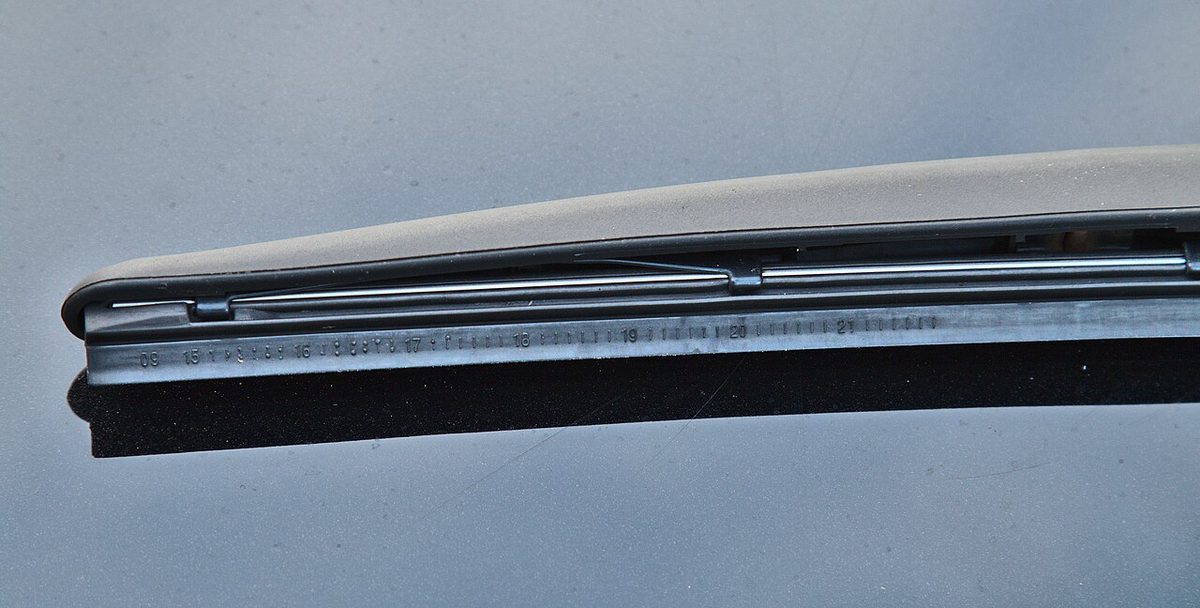
Wipers that leave a clean arc everywhere except the middle of the driver's view are worn where it counts. Chattering across the glass means the rubber has taken a set and is skipping instead of squeegeeing — it will not recover with cleaning.
For lights: have someone stand behind the vehicle while you tap the brakes and run the signals, twice a year. It takes a minute and it finds the bulb you cannot see from the driver's seat.
hardened rubber — replacement, not cleaning, is the fix
an aging bulb near the end, or a hazed lens stealing the light
safety and a traffic stop, in one small bulb
Can't see like you used to? Book a visit → or call (270) 861-2003 — blades and bulbs are quick work.
Why Lighting Matters More on Barren County Roads Than in Town
Most of the driving around Glasgow after dark is not under streetlights. It is two-lane county roads, unlit curves, and the stretch of Highway 68 where the only light is yours — with deer, farm equipment, and gravel shoulders sharing the dark. On roads like that, headlight output is not a comfort feature; the distance your low beams actually illuminate is the distance you have to see a deer and stop. Bulbs lose output gradually as they age, long before one burns out completely, and a hazed lens can scatter much of what the bulb still makes.
That gradual dimming is the trap: because it happens over seasons, drivers adapt to it and blame their eyes. The honest test is comparison and inspection — one side dimmer than the other, a lens gone cloudy or yellowed, a beam pattern that lights the ditch better than the lane. Lens condition, bulb age, and aim all get looked at in a lighting check here, and the fix matches the cause: fresh bulbs where bulbs are tired, attention to the lens where the lens is stealing the light, aim corrected where aim has wandered.
Ice, Scrapers, and the Kentucky Winter Life of a Wiper Blade
Kentucky winters are harder on wiper blades than the mileage suggests. A blade frozen to the windshield that gets torn free by the wiper motor loses its edge in one morning; a blade used to push slush and freezing rain works loads it was never shaped for; and the common shortcut — running the wipers to clear frost instead of scraping — grinds the rubber across ice crystals until the edge that squeegees cleanly is gone. Add summer heat baking the same rubber on a hot windshield in July, and a set of blades lives a full life here in about a year of seasons, whatever the odometer says.
The winter lighting half matters just as much. Short days mean the Glasgow commute runs in the dark both ways for weeks, road salt film coats lenses and steals output, and a single dead brake light in slushy traffic removes the warning the driver behind you needs most. A mid-winter once-over — blades by condition, every bulb walked and checked, lenses wiped and inspected — is minutes of work at a maintenance visit. The alternative is discovering all three on a freezing-rain night, which is when every driver in Barren County discovers them at once.
Ready to Roll? Let’s Get You on the Schedule.
Call the shop at (270) 861-2003 and we’ll line it up — or book online and we’ll confirm your time. Walk-ins are welcome Monday–Friday, 8:00 AM–5:00 PM.
Both headlight bulbs work, but the road still looks dim. What else could it be?
Two usual suspects: bulbs that have lost output with age — they fade long before they fail — and lenses hazed by years of sun and road film, which scatter the light instead of projecting it. A lighting check compares sides and inspects the lenses so the fix matches the actual cause.
I replaced one headlight bulb. Should I have done both?
It is worth considering. Bulbs age as a pair, so the old one is usually dimmer and closer to failing than the new one — drivers often notice the mismatch as uneven light. If the second bulb is the same age as the one that died, replacing it at the same time keeps both sides even.
Can wiper blades be damaged by ice even if they look fine?
Yes. A blade frozen to the glass can tear its edge when it breaks free, and clearing frost with the wipers grinds the rubber over ice. The damage shows up as streaking and a missed band right at eye level the next rain — by then the edge is gone and replacement, not cleaning, is the fix.
How often do wiper blades need replacing?
By condition, not mileage — heat, frost, and grit age the rubber. Streaking, chattering, or a torn edge is the signal; most sets are ready after a year or two of Kentucky seasons.
Can you check my lights while I am in for other work?
Yes — a walk-around lighting check pairs naturally with any maintenance visit, and bulbs are small, quick replacements. Ask when you book and it goes on the visit.
My headlights seem dim but both bulbs work. What is that?
Aging bulbs lose output before they fail, and hazed lenses scatter what is left. Both are checkable in one look — and both are fixable without replacing assemblies in most cases.
Where are you located?
1004 Happy Valley Rd, Glasgow, KY 42141 — about 15 minutes from I-65 Exit 53 in Cave City.