
Barren County Runs on These Tires Too
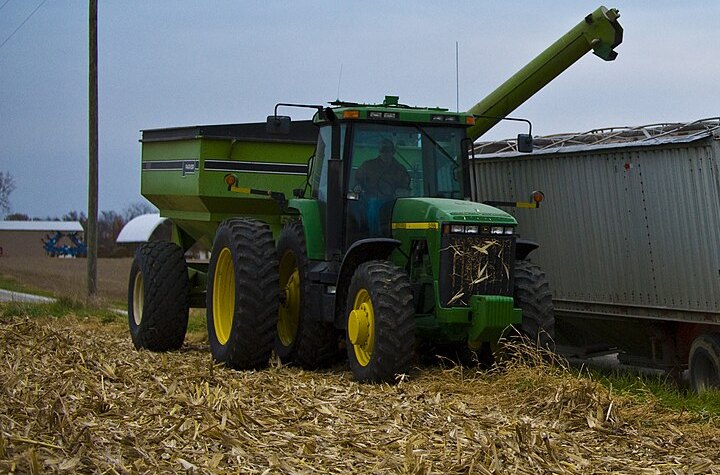
Farm and ag tires in Glasgow, KY — agriculture is Barren County's backbone, and the tractors and implements that work it roll on tires with a harder life than anything on the highway: stubble, rocks, loads, and long seasons in the sun. We supply and service farm tires for the operations around Glasgow, in the same shop that keeps the county's trucks rolling.
Ag tires fail differently from road tires. Weather-checking and sidewall aging from sun and seasons end more farm tires than worn tread does — a tire can have deep lugs and still be done. Tubes, valve stems, and rim condition matter as much as the tire itself, and a careful look at all of it is part of fitting replacements that will last.
Sizing and type run by the machine and the work — fronts and rears, drive tires and implement tires, each matched to what the equipment does. Bring the size off the sidewall, or the machine itself if it is road-worthy, and we will work from there; if it is a size we do not keep on the shelf, we will tell you straight what getting it involves.
Farm work runs on seasons, and a tire problem in planting or hay season is not the same as one in January. Call ahead at (270) 861-2003 and we will line the work up around the machine's schedule as tightly as we can.
Weather-Checking Beats Tread Depth Out Here
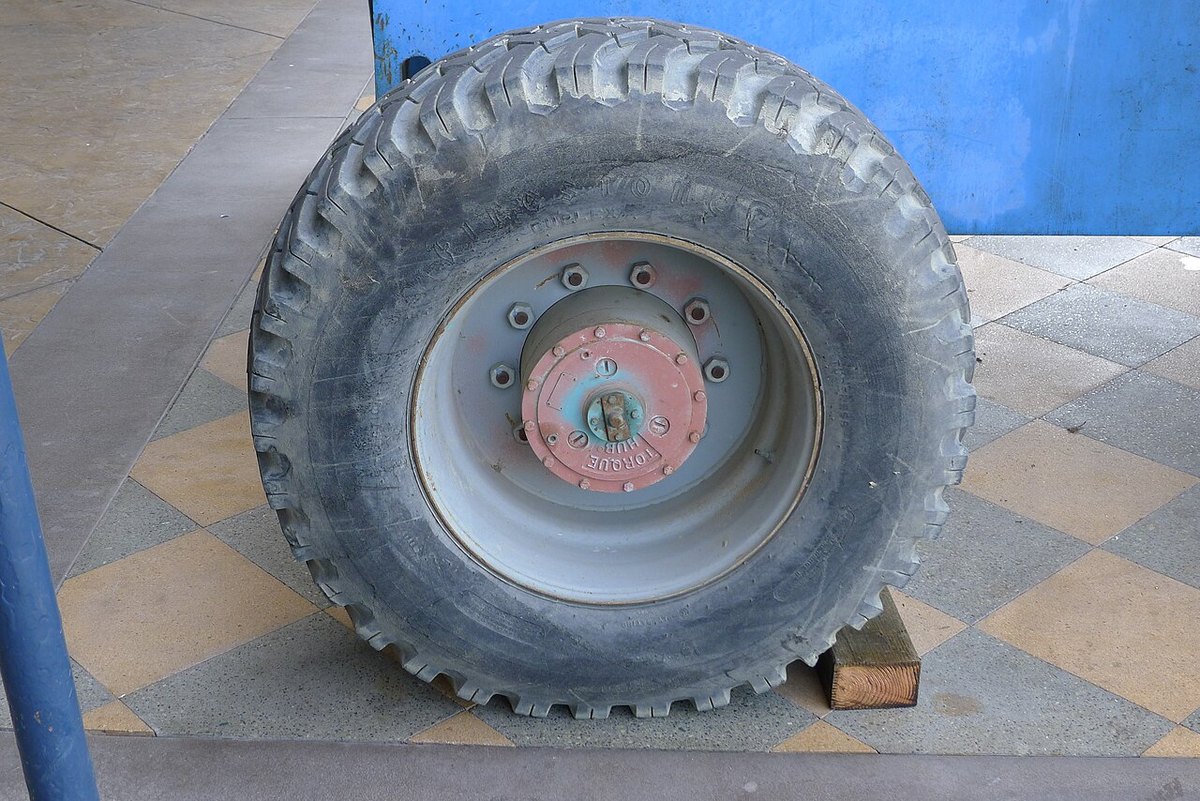
Deep cracking across the sidewall — weather-checking — is the ag tire's true odometer. Lug wear matters, but a checked, brittle sidewall under load is the failure that happens in the field, at the worst hour of the season.
Slow leaks on equipment that sits are the other classic: a tire that is soft every time the machine comes out of the barn has a cause — tube, valve, or bead — worth fixing once instead of airing up forever.
sun and seasons, not miles — the real end of a farm tire's life
a slow leak with a findable cause
traction is the job; worn lugs are a safety and work issue
Farm tire needs attention? Book a visit → or call (270) 861-2003.
What a Farm Tire Survives That a Highway Tire Never Sees
A tractor tire works at low speed under heavy torque, climbing out of ruts with a loaded implement behind it, crossing stubble that can puncture like a field of short nails, and rolling over rock on headlands and gravel lanes between fields. Then the same machine may sit in a barn for months and be asked for its hardest week of the year the day planting or hay cutting starts. No highway tire lives a life anything like that rotation of punishment and rest.
That cycle is why farm rubber gets judged differently here. Lugs are read for the traction the work actually demands, tubes and valve stems get the same attention as the casing, and rim condition matters because a rusted rim will chafe a tube and leak a tire down in the middle of a field. A tire that loses air slowly all winter is rarely a mystery — it is a tube, a stem, or a bead asking to be fixed once, properly, before the season leans on it.
A Pre-Season Look Beats a Breakdown in the Hay Field
The cheapest time to sort out farm tires is the quiet weeks before the machine is needed every day. A pre-season look covers the whole set the way a season will test it: sidewalls flexed and read for deep weather-checking, tread and lugs measured against the work ahead, pressures set for load, valve hardware replaced where it is perished, and the implement and wagon tires walked around too — the small tires on trailers and equipment are the ones nobody looks at until one lets go under a load.
If a replacement is coming, sizing starts with what is stamped on the sidewall and what the machine does: fronts and rears, drive tires and implement tires are matched to the equipment, not guessed from a photograph. Call ahead at (270) 861-2003 and we will line the work up around the machine's schedule as tightly as we can — a family-owned shop serving Glasgow since 2022 knows what a down tractor costs in the wrong week of a Barren County spring.
Ready to Roll? Let’s Get You on the Schedule.
Call the shop at (270) 861-2003 and we’ll line it up — or book online and we’ll confirm your time. Walk-ins are welcome Monday–Friday, 8:00 AM–5:00 PM.
What should I have ready when I call about a farm tire?
The size stamped on the sidewall is the big one, plus the machine it fits and whether it is a front, a rear, or an implement tire. Tube or tubeless, if you know it, helps too. With that in hand we can tell you straight what we have, what we can get, and how the timing looks.
Do you keep every farm tire size on the shelf?
No shop honestly could — ag sizes run wide. Tell us the size and the machine, and we will say plainly whether it is here, how getting it works if it is not, and what the timing looks like against your season.
The tractor pulls to one side and the fronts are wearing unevenly. Is that the tires?
Uneven front wear on a tractor usually reports a steering or toe problem wearing the tires, not tires causing the problem. Bring the machine in if it is road-worthy, or call and describe the wear — replacing fronts without fixing what wore them just feeds the new set to the same fault.
What farm tires can you get?
Tractor fronts and rears and implement tires are the core of it. Bring the size from the sidewall — or call with the machine and tire size — and we will tell you straight what we can get and how fast.
The tread looks fine but the sidewalls are cracked. Is it done?
Weather-checking is how most ag tires actually end. Deep sidewall cracking under load is a failure waiting for a field and a deadline; bring it in for a look before the season does the testing.
Can you fix a slow leak on a tractor tire?
Slow leaks have causes — tube, valve stem, bead, or a puncture — and most are repairable. The tire gets inspected and the cause named before money moves.
Where are you located?
1004 Happy Valley Rd, Glasgow, KY 42141 — about 15 minutes from I-65 Exit 53 in Cave City.